
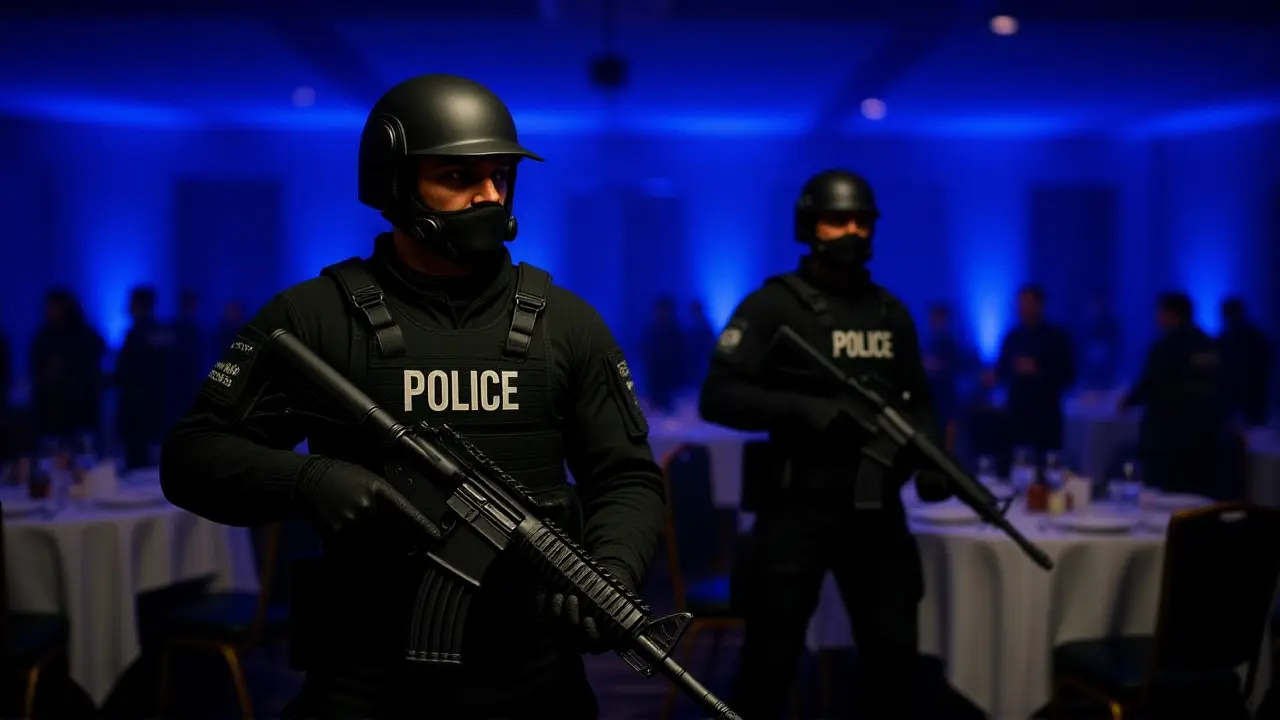
It was supposed to be a night of punchlines and polite applause. Instead, the White House Correspondents' DinnerWashington, D.C. descended into chaos on Saturday night, April 25, 2026. A lone gunman, armed with a shotgun, a handgun, and multiple knives, charged the venue where Donald Trump, US President was in attendance. The attack forced an immediate evacuation of the First Family and top officials, turning a glitzy media gala into a scene of fear and urgency.
Here’s the thing that kept everyone awake all night: nobody died. That is a miracle in itself. Law enforcement sources confirmed that the suspect was detained at the scene almost immediately after making his move. He is scheduled to face charges in federal court on Monday. But the shockwaves from this breach of security have rippled far beyond the capital, drawing swift and severe condemnation from world leaders who see this not just as a crime, but as an assault on democratic norms.
A Global Outcry Against Political Violence
The international response was remarkably unified, though the tone varied slightly depending on each leader's relationship with the US administration. Across social media platforms like X, heads of state emphasized one core message: violence has no place in democracy.
Emmanuel Macron, French President was among the first to weigh in, calling the incident "unacceptable." In a post on X, he declared, "Violence has no place in a democracy," while extending "full support to Donald Trump." It’s a delicate balance—condemning the act while maintaining diplomatic ties. Similarly, Benjamin Netanyahu, Israeli Prime Minister, alongside his wife Sara, expressed being "shocked by the attempted assassination." Their relief was palpable: "We are relieved that the President and the First Lady are safe and strong," they wrote.
But it wasn’t just allies speaking out. Keir Starmer, British Prime Minister, stated he was "shocked by the scenes at the White House Correspondents' Dinner in Washington overnight." His message was broader, targeting the institution rather than just the individual: "Any attack on democratic institutions or on the freedom of the press must be condemned in the strongest possible terms." This framing is crucial. It shifts the narrative from a personal threat to a systemic warning.
Neighbors and Partners React
Close neighbors felt the tremors too. Mark Carney, Canadian Prime Minister, shared that he was "relieved that the President, the First Lady, and all guests are safe." He added a somber note about the fragility of peace: "Political violence has no place in any democracy and my thoughts are with all those who have been shaken by this disturbing event."
To the south, Mexico’s President offered respect for the safety of the Trumps, stating simply, "Violence must never be the way." Meanwhile, Narendra Modi, Indian Prime Minister, echoed the sentiment heard across continents: "Violence has no place in a democracy and must be unequivocally condemned." He extended best wishes for their continued safety, highlighting the global concern for the stability of the US executive branch.
In Europe, the reaction was equally firm. Pedro Sanchez, Spanish Prime Minister, condemned the "attack that took place tonight against President Trump," adding that humanity moves forward only through "democracy, coexistence, and peace." Even Viktor Orban, Hungarian Prime Minister, known for his complex relationship with Western liberal democracies, weighed in. As a self-described ally of Trump, his statement was brief but clear: "There's no place for violence in politics."
The Press Under Siege?
What makes this incident particularly chilling is the setting. The White House Correspondents' Dinner is traditionally a celebration of the Fourth Estate—the press. European Union Foreign Policy Chief Kaja Kallas highlighted this irony perfectly on X: "An event meant to honour a free press should never become a scene of fear."
This isn't the first time political gatherings have faced threats, but the weaponization of such a symbolic event sends a dark signal. The European Commission President reinforced this, emphasizing that "Violence has no place in politics, ever." For journalists, who often feel targeted by rhetoric from both sides of the aisle, seeing a physical attack at their own annual gathering raises serious questions about safety and access.
Security Breaches and Future Implications
The details of how the suspect breached security remain under investigation. The fact that he carried a shotgun, a handgun, and knives suggests premeditation. Security protocols at the White House events are notoriously tight, involving layers of screening by the Secret Service and local law enforcement. How did this get through? The answers will likely come in the coming days, but the initial failure is undeniable.
The suspect faces federal charges starting Monday. Legal experts suggest that if convicted, he could face decades in prison, given the severity of attempting to harm a sitting president. But legal consequences don't undo the psychological impact. The image of a gunman charging a room full of diplomats, journalists, and politicians is one that will linger in the public consciousness for years.
For now, the focus is on recovery. The First Family is safe. The Vice President is unharmed. But the question remains: what does this say about the health of American political discourse? When words fail, some turn to violence. The world is watching, hoping that the answer to that darkness is not more darkness, but a renewed commitment to democratic resilience.
Frequently Asked Questions
Who was the suspect in the White House Correspondents' Dinner shooting?
The suspect was a lone individual armed with a shotgun, a handgun, and multiple knives. He was detained at the scene immediately after charging the event. Authorities have not released his identity publicly yet, but he is scheduled to face federal charges in court on Monday following the incident.
Were there any casualties in the attack?
No, there were no reported casualties. US President Donald Trump, the First Lady, and the Vice President were evacuated safely. While the incident caused significant panic and required an emergency response, law enforcement confirmed that no lives were lost during the confrontation.
How did world leaders react to the incident?
World leaders reacted with swift condemnation. Figures including French President Emmanuel Macron, British PM Keir Starmer, and Israeli PM Benjamin Netanyahu called the attack unacceptable. The consensus across different political alliances was that political violence has no place in democracy and that democratic institutions must be protected.
Why is the location of the attack significant?
The White House Correspondents' Dinner is a major annual event celebrating the press and journalism. An attack here is seen as a direct threat to freedom of the press and democratic dialogue. EU Foreign Policy Chief Kaja Kallas noted that an event honoring the free press becoming a scene of fear is deeply troubling for global democratic norms.
What charges will the suspect face?
The suspect is scheduled to face federal charges on Monday. Given the nature of the attack—attempting to harm a sitting US President with multiple weapons—he could face severe penalties, potentially including life imprisonment if convicted. Federal courts handle cases involving threats against high-ranking government officials.