
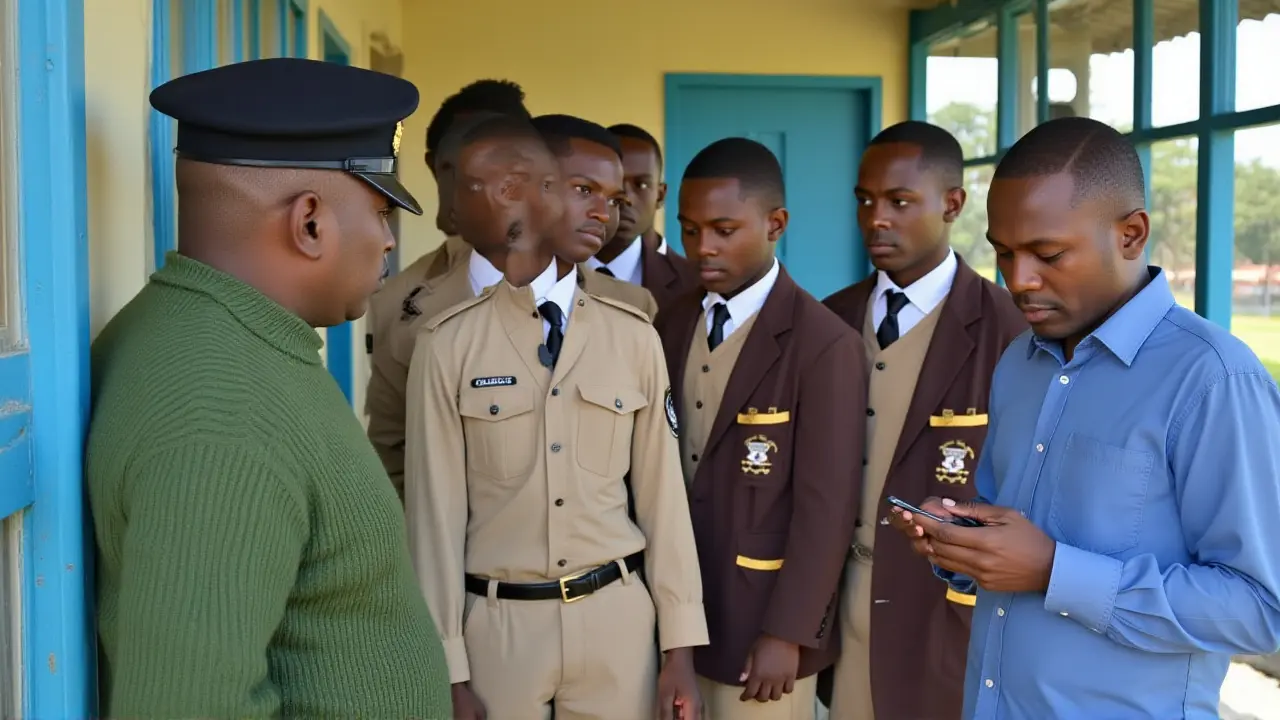
The Kenya National Examinations Council (KNEC) is shaking up how it handles security for the 2025 academic cycle, opting for a "lighter touch" to keep students from panicking. By slashing the number of police officers stationed at schools, the council hopes to swap the feeling of a security operation for a calm academic environment. This shift, announced by Dr. David Njengere, Chief Executive of KNEC, marks a departure from the heavily policed atmospheres of previous years.
Here's the thing: for years, the sight of armed officers patrolling corridors has been a staple of Kenyan exam seasons. While intended to stop cheating and paper leaks, it often had the opposite effect on the students—heightening stress levels just as they sat down to take the most important tests of their lives. The new strategy focuses on"invisible" security, where the police are present for logistics but out of the students' direct line of sight.
- KPSEA: Zero police officers deployed at centers.
- KJSEA: Maximum of one officer per center for script transport only.
- Timeline: Main exams run from October to November 2025.
- Schedule: First session at 8:00 a.m.; second session at 2:00 p.m.
A Strategic Shift in Security Logistics
The specifics of this rollout are quite stark. For the Kenya Primary School Education Assessment (KPSEA), the police will be entirely absent from the centers. It's a bold move that trusts school administration to handle the atmosphere. For the Kenya Junior School Education Assessment (KJSEA), the police role has been stripped down to a delivery service. One officer per center will be tasked exclusively with the secure collection and return of examination scripts from storage containers.
Turns out, the goal isn't just about student comfort; it's about efficiency. By limiting police to administrative tasks, KNEC is essentially treating the officers as secure couriers rather than guards. This ensures the integrity of the papers—preventing leaks and ensuring scripts reach the marking centers—without making the classroom feel like a precinct.
The 2025 Examination Calendar and Deadlines
The heavy lifting happens in late 2025. The KCSE examination seasonKenya is slated to run from October through November. Two critical dates already on the radar are Wednesday, 22 October 2025, and Wednesday, 12 November 2025. (If you're a student or parent, mark those in red.)
KNEC has been very firm about the clock. All first session papers kick off at 8:00 a.m., and second session papers start at 2:00 p.m. Interestingly, the council has explicitly stated that no extra time will be granted. There's a small but important caveat here: if there's a clash between the official timetable and the instructions on the actual question paper, the paper's time takes precedence. It's a detail that could save a student from a panic attack during the final minutes of a test.
Grade 8s and the Transition to Competency-Based Learning
While the seniors are stressing over the KCSE, the Grade 8 students aren't getting a free pass. In October 2025, KNEC will be administering School Based Assessments. These aren't just checkboxes; they cover critical subjects including Mathematics, Agriculture, and Social Studies.
These assessments are designed to gauge how well learners can actually apply what they've learned—not just memorize facts. The scoring criteria provided to teachers are meant to be more flexible and application-based, fitting into the broader shift toward the Competency-Based Curriculum (CBC) that has been rolling out across Kenya.
Why This Matters for the Education System
This isn't just a change in policing; it's a psychological shift. Education experts have long argued that high-stakes testing environments in Kenya were overly militarized. When a child sees a police officer, their brain shifts into "threat mode," which can impede the cognitive functions needed for complex problem solving in math or science. By removing that trigger, KNEC is essentially trying to optimize the biological performance of the candidates.
However, some may wonder if this leaves the door open for exam irregularities. The council's bet is that strategic deployment—focusing on the movement of papers rather than the monitoring of students—is enough to maintain the "sanctity" of the process. It's a calculated risk: trade a bit of visible deterrence for a lot more student mental wellness.
Looking Ahead: The Ripple Effect
If this experiment works in 2025, we could see a permanent change in how national exams are conducted in East Africa. The move toward a calmer environment aligns with global trends in education that prioritize mental health and holistic assessment over rigid, fear-based monitoring.
The real test will be in November 2025. If the papers are delivered securely and cheating rates remain low, Dr. Njengere will have successfully modernized the Kenyan exam experience. If things go sideways, expect the police to return in full force for the 2026 cycle.
Frequently Asked Questions
Will there be any police at primary school exam centers?
No. According to the new KNEC guidelines for 2025, there will be no police officers present during the Kenya Primary School Education Assessment (KPSEA) to ensure students feel relaxed and focused.
What is the specific role of police during the KJSEA exams?
For the Kenya Junior School Education Assessment, only one officer will be assigned per center. Their sole responsibility is the logistics of collecting and returning examination scripts from storage containers, not monitoring students.
What happens if the exam paper time differs from the timetable?
In the event of a discrepancy, the time stated on the actual question paper takes precedence over the official timetable provided by KNEC.
Which subjects are being assessed for Grade 8 students in October 2025?
Grade 8 learners will undergo School Based Assessments in three core areas: Mathematics, Agriculture, and Social Studies, focusing on the application of concepts taught in the classroom.
Can students request extra time during the 2025 exams?
No. KNEC has explicitly stated in its 2025 guidelines that no extra time will be allowed for any examination paper, regardless of the session.