
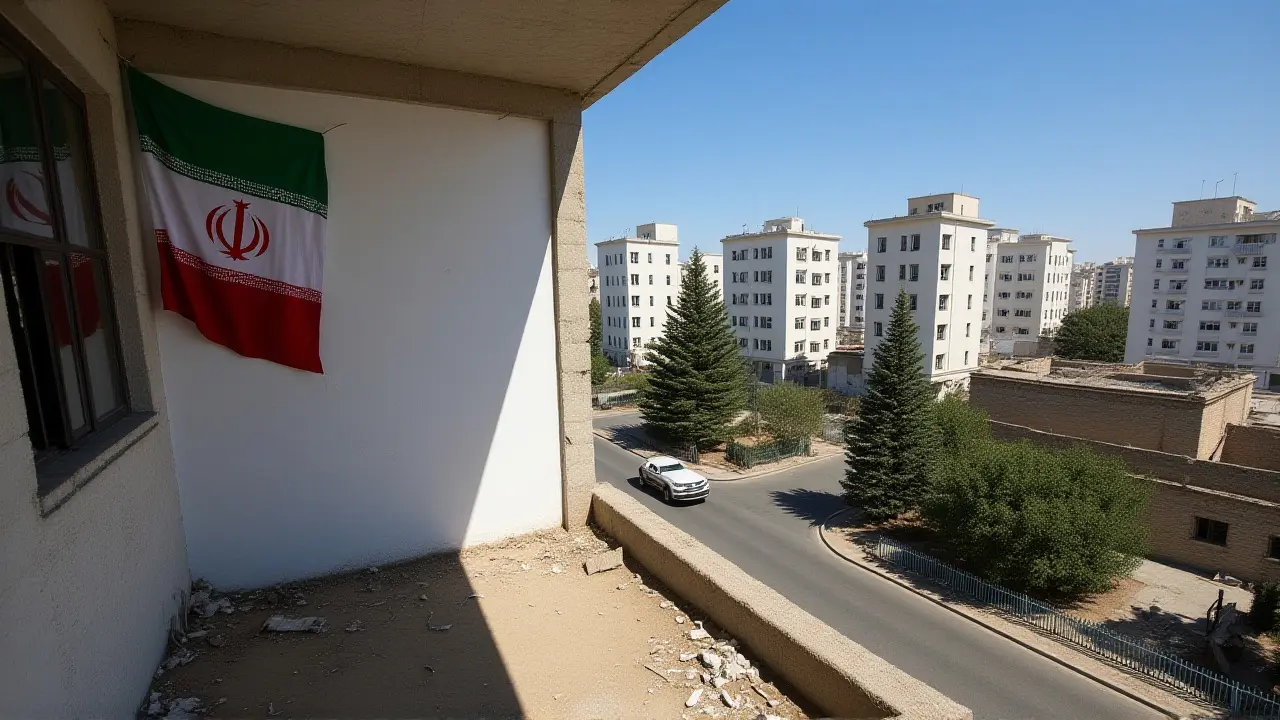
The world's energy arteries are tightening. On February 28, 2026, Iran claimed to have shut down the Strait of Hormuz, the most critical oil chokepoint on the planet, following a brutal day of missile exchanges with a coalition led by Israel and the United States. This isn't just a diplomatic spat; it's a high-stakes gamble that has already sent Brent crude prices spiking to $115 a barrel and left hundreds of ships trapped in a maritime deadlock.
Here's the thing: while the Iranian state media and the Tasnim news agency—which is essentially a mouthpiece for the Islamic Revolutionary Guards Corps (IRGC)—announced the closure as a direct response to military strikes, the reality on the water is a chaotic mix of warnings and panic. Ships have been bombarded with high-frequency radio messages from the IRGC stating that no vessels are permitted to pass. It's a classic move of psychological warfare, but the shipping industry is treating it as a hard reality.
- Traffic Drop: Vessel traffic plummeted 40-50% within hours on February 28.
- Ship Blockade: Approximately 600 international trading ships are currently bottled up inside the Gulf.
- Economic Hit: Brent crude oil touched $115 per barrel.
- Shipping Response: Hapag-Lloyd suspended all movements through the Strait.
- Current Flow: Average outbound flows dropped from 21.2 million barrels per day in January to 20.4 million in February.
The Chaos at Sea: 'Operation Epic Fury'
The situation evolved rapidly into what is being called Operation Epic FuryStrait of Hormuz. By early March 2026, the de facto blockade had effectively shrunk shipping through the strait by a staggering 90 percent. It's a nightmare scenario for global trade. Imagine 600 ships—laden with oil, chemicals, and consumer goods—just sitting there, unable to leave the Gulf.
The panic was visible in real-time. S&P Global Commodities at Sea analysts watched as ships raced toward the exit on February 28, desperate to escape the zone before the curtain closed. Specific vessels, like the Desh Abhimaan, were seen turning around before even entering the strait. Others, including the New Vision and the Valor, were caught in the bottleneck while attempting to reach Fujairah. Turns out, the risk of seizure or missile fire outweighed the urgency of delivery.
Maritime risk firm Ambrey didn't mince words, advising ships—especially those with ties to the U.S. and Israel—to shelter in territorial seas immediately. They warned against transiting not just the strait, but the entire Persian Gulf, the southern Red Sea, and the Gulf of Aden. Essentially, the region has become a no-go zone for Western-linked shipping.
Trump's 'Total Destruction' Ultimatum
The response from Washington has been swift and aggressive. Donald Trump, serving as President of the United States, has shifted from diplomacy to direct threats. In a move that mirrors his "maximum pressure" philosophy, Trump has deployed hundreds of elite special forces, including Navy SEALs and Army Rangers, to the Middle East to prepare for potential kinetic operations.
The warning is clear: open the strait or lose your infrastructure. Trump has specifically threatened the destruction of Iranian electric generating plants, oil wells, and Kharg Island—Iran's primary oil export terminal. By targeting the very things that fund the Iranian regime, the U.S. is attempting to force a reversal of the blockade through the threat of total economic paralysis.
The 'Pay-to-Play' Transit Scheme
Interestingly, Iran isn't claiming the strait is completely closed to everyone—just to those they don't like. They've introduced a predatory "clearance" system. To get through, vessels must be cleared by Tehran, and some are reportedly being charged fees as high as $2 million just for passage. It's essentially a protection racket on a global scale.
There is a slight crack in the blockade, however. According to Pakistan's foreign minister, Iran has agreed to allow 20 Pakistani-flagged vessels to transit, but only at a snail's pace of two ships per day. This suggests Iran is using maritime access as a diplomatic carrot to keep neutral neighbors on their side while squeezing the West.
Wider Economic Ripples and Expert Analysis
The ripple effects are already hitting the consumer. Beyond oil, the global fertilizer supply chain is in turmoil, as the Gulf is a major hub for the chemicals needed for industrial farming. If this blockade lasts another two weeks, we could see food price inflation globally.
Industry analysts suggest that the IRGC is testing the resolve of the current U.S. administration. By leveraging the 21 million barrels of oil that move through this narrow strip of water daily, Iran is reminding the world that it holds the "off switch" for the global energy market. However, the danger is that a single miscalculation—a stray missile or a seized tanker—could trigger a full-scale regional war.
Frequently Asked Questions
Why is the Strait of Hormuz so important for global oil?
The strait is the only sea passage from the Persian Gulf to the open ocean. About one-fifth of the world's total oil consumption passes through this narrow channel daily. If it's closed, there are very few viable pipelines to move oil out of the region, leading to immediate global shortages and price spikes.
What is 'Operation Epic Fury'?
Operation Epic Fury refers to the Iranian military operation launched on February 28, 2026, to blockade the Strait of Hormuz. It involves the IRGC using high-frequency warnings and naval presence to prevent shipping, specifically targeting vessels with links to the U.S. and Israel following missile exchanges.
How are shipping companies like Hapag-Lloyd responding?
Major carriers are suspending all transits through the region until further notice. Hapag-Lloyd has warned that ships calling at Arabian Gulf ports will face significant delays or complete rerouting, which increases operational costs and disrupts global supply chains for containerized goods.
What specific targets has President Trump threatened?
President Trump has threatened to destroy Iran's critical energy infrastructure, specifically naming electric generating plants, oil wells, and Kharg Island. This strategy aims to cripple Iran's ability to generate revenue and provide power to its citizens to force the reopening of the strait.
Brent hitting 115 is basically a signal that the market is pricing in a full scale war no one is talking about the actual logistics of the alternative pipelines yet which are barely enough to offset even a fraction of that flow
lol imagine thinking trump actually solves this without blowin up the hole middle east again just more of the same garbage
actually the blockade is probably just a bluff to get a better deal on the nuke pact. the irgc loves thier theater and this is just one big show to make em look strong for the folks back home. u guys fall for it every time
The geopolitical ontology here is just fascinatingly grim. We are seeing a collision between the West's neoliberal hegemony and a regional power trying to weaponize a geographical singularity. It is essentially a game of chicken played with the global economy as the stakes. Why do we always default to kinetic solutions when the systemic fragility is what's actually being exploited? 🙄 It is just heartbreaking to see how little we have evolved in our diplomatic approach.
Charging $2 million for a 'clearance' fee. Truly a masterclass in diplomatic relations.
absolute madness how the west just pumps guns in there and then acts suprised when things go south its totaly immoral to ignore the human cost of these infrastructure strikes
Thinking about all the crew members on those 600 ships right now. The cognitive load must be insane 😟 Hopefully, the maritime stakeholders can pivot their KPIs to safety and stability soon! Sending good vibes to the sailors! ✨
The fertilizer angle is the real sleeper hit here. People forget that phosphorus and nitrogen shipments moving through the Gulf are critical for crop yields in Asia and Africa. If we hit a two-week window of zero flow, food prices in the developing world will absolutely skyrocket. 🌾📈
Um, excuse me, but everyone is ignoring the Pakistan detail! The fact that Iran is letting 20 ships through at a snail's pace is such a calculated move. It's basically a public relations stunt to keep the neighborhood from turning on them completely. Absolute drama! 💅
The technical reality is that Kharg Island is the bottleneck for Iranian exports. If that facility is neutralized, Iran loses its primary revenue stream almost instantly regardless of whether the strait is open or closed.
This is a classic dialectic of power. The US employs a strategy of asymmetric deterrence by threatening the metabolic infrastructure of the state, while Iran utilizes the strategic choke point as a leverage mechanism to disrupt the global flow of capital. It is a recursive loop of escalation where the equilibrium is only maintained through the credible threat of mutual economic annihilation. The synthesis here is not peace, but a fragile state of terror.
I really hope both sides can find a way to talk this out before things get even worse 🕊️ Let's just keep hoping for a peaceful resolution for everyone involved ❤️
Wild to see this happening in 2026. Feels like we're living in a Tom Clancy novel gone wrong.
Its just crazy that some people think this is la reasonable way to handle things
The deployment of special forces is a measured response to ensure the security of international waters
Just watching it all unfold from the sidelines. Stay strong everyone.
Hopefully the diplomatic channels remain open for a quick resolution.