
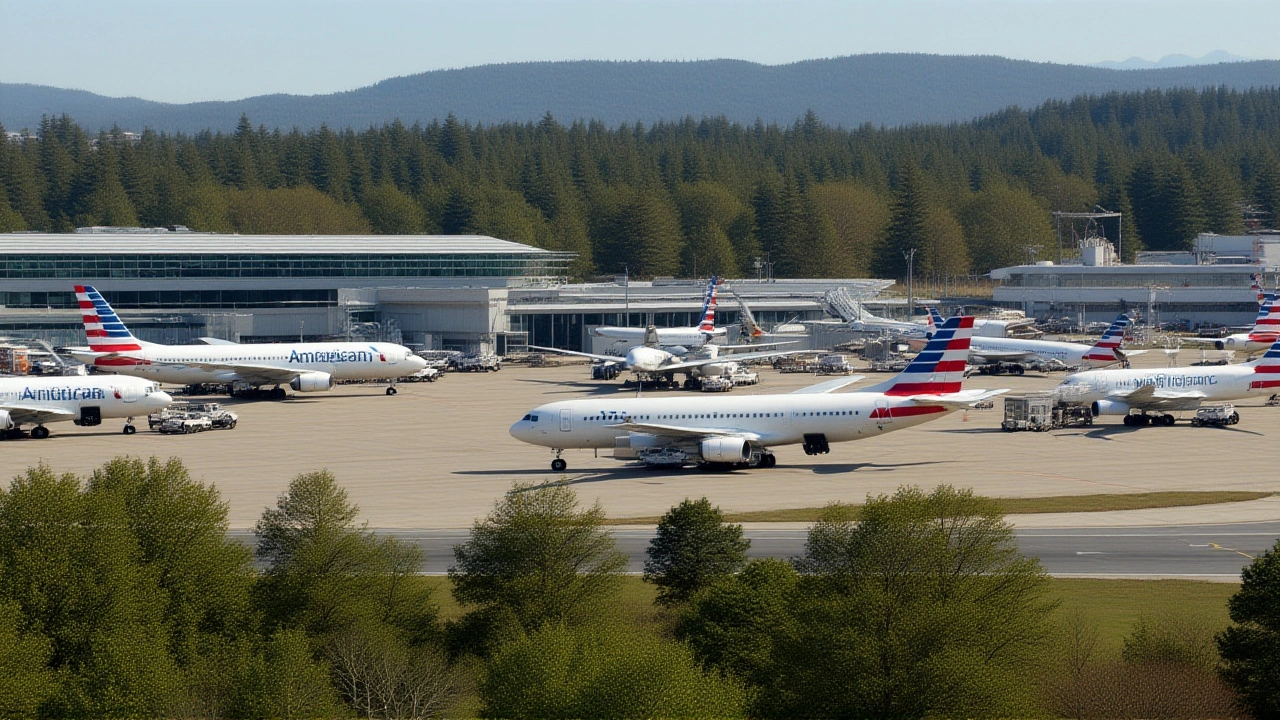
The Federal Aviation Administration officially lifted flight restrictions at 40 major U.S. airports on November 26, 2025, just hours before the Thanksgiving travel rush began — a move that prevented what could have been the worst holiday travel crisis in a decade. The decision came after a six-week federal government shutdown left air traffic controllers working without pay, forcing the FAA to slash flights to avoid safety risks. More than 8,000 commercial flights were canceled between November 7 and November 26, 2025, stranding millions and crippling supply chains. But with the shutdown resolved, the skies reopened — just in time.
How the Shutdown Grounded the Skies
The crisis began in late September 2025, when Congress and the White House failed to pass a funding bill. By early November, the National Air Traffic Controllers Association reported that nearly 15% of its members had taken unpaid leave, citing exhaustion and financial strain. With fewer controllers on duty, the Federal Aviation Administration was forced to reduce flight volumes at its busiest hubs. The cuts didn’t start as a full shutdown — they began as a trickle. Then, by November 7, the FAA ordered immediate reductions across 40 airports, including Hartsfield-Jackson Atlanta International Airport (ATL), Chicago O’Hare International Airport (ORD), John F. Kennedy International Airport (JFK), Dallas/Fort Worth International Airport (DFW), and Denver International Airport (DEN). These five airports alone accounted for over 60% of all cancellations.It wasn’t just domestic flights. International carriers like Lufthansa, Air Canada, and Emirates saw delays and cancellations because U.S. airspace controls are the backbone of transatlantic and transpacific routes. A single controller shortage in Atlanta can ripple across Europe and Asia. "It’s like removing a few gears from a watch," said one veteran air traffic controller who spoke anonymously. "The whole thing ticks slower — and sometimes, it stops."
United Airlines and the Refund Wave
United Airlines, headquartered in Chicago, moved quickly to ease passenger stress. On November 10, 2025, the airline announced a refund policy for anyone who had booked travel on or before November 16 — provided their ticket was purchased by November 4. More than 11,200 passengers claimed refunds under that window. "We didn’t want people stuck in limbo," said a United spokesperson. "If you knew you might not fly, we gave you an out." But refunds didn’t fix the bigger problem: the backlog. With controllers working 12-hour shifts without breaks for weeks, many were physically and mentally drained. Even after the shutdown ended, the FAA didn’t just flip a switch. Controllers needed rest. Planes needed repositioning. Cargo shipments were stuck in holding patterns. "It’s not like turning on a faucet," said aviation analyst Lena Torres. "You can’t magically refill the system."Thanksgiving 2025: A Record-Breaking Rush
The Transportation Security Administration (TSA) projected a record 17.8 million travelers would pass through U.S. checkpoints between November 25 and December 2, 2025 — surpassing even pre-pandemic levels. That’s nearly 1.5 million more than Thanksgiving 2024. Airports braced for chaos. Lines at security checkpoints stretched past two hours at Atlanta and Dallas. At JFK, travelers reported seeing TSA agents working double shifts, with volunteers from the National Guard helping with crowd control.Hotels in Orlando, Miami, and Nashville reported 98% occupancy rates by November 23. Restaurants in Las Vegas booked private dining rooms months in advance. "This wasn’t just travel," said Maria Chen, owner of a family-run inn in Gatlinburg, Tennessee. "It was economic oxygen."
What’s Still Broken — and What’s Coming Next
Despite the FAA’s lift, disruptions didn’t vanish overnight. StaffTraveler’s analysis warned that crew schedules remained volatile through late November, with pilots and flight attendants rerouted, stranded, or stuck on standby. Some flights scheduled for November 27 were delayed by over five hours due to aircraft positioning issues. "We’re not back to normal," said one Southwest Airlines flight attendant who asked not to be named. "We’re back to running on fumes." The FAA has pledged to hire 500 new air traffic controllers by March 2026 and implement mandatory rest protocols. But the bigger question lingers: Why did this happen at all? The shutdown wasn’t about aviation policy — it was about politics. And until Congress stops using government funding as leverage, experts say, this could happen again.What Travelers Should Do Now
Travel and Tour World advises: Arrive two hours early for domestic flights, three for international. Check live flight status — don’t rely on your airline’s app alone. Use TSA PreCheck or CLEAR if you have it. And pack patience. "The system’s healing," said FAA spokesperson Robert Delaney. "But it’s still bruised." For those who flew during the crisis, the message from controllers is simple: Thank you for understanding. And next time? Book early. Fly flexible. And maybe — just maybe — consider driving.Frequently Asked Questions
Why did the FAA cancel so many flights during the shutdown?
The FAA reduced flights to maintain safety after thousands of air traffic controllers — working without pay — began calling in sick or taking leave. With fewer controllers available, the agency had to limit the number of simultaneous takeoffs and landings to prevent dangerous congestion. The system couldn’t operate safely at normal capacity, so cancellations became a necessary risk-management tool.
How did the shutdown affect international flights to and from the U.S.?
International flights were severely disrupted because U.S. airspace controls are critical to global air traffic routing. Delays in Atlanta or Chicago caused cascading cancellations in London, Frankfurt, Tokyo, and Mexico City. Even flights that never landed in the U.S. were rerouted or delayed because they passed through U.S.-controlled airspace or relied on U.S.-based navigation systems.
What was United Airlines’ refund policy during the crisis?
United Airlines offered full refunds to passengers who booked flights on or before November 16, 2025, and purchased their tickets by November 4, 2025. Over 11,200 travelers took advantage of the policy. The airline also waived change fees for those who wanted to reschedule, recognizing that uncertainty was the biggest burden for customers.
Why did the FAA lift restrictions on November 26 instead of earlier?
The FAA waited until the government funding bill was signed into law on November 25, 2025, and then spent 24 hours coordinating with airlines, controllers, and airport authorities to ensure a safe ramp-up. They needed time to recall rested controllers, reposition aircraft, and reset schedules. Rushing could have caused new delays — and the agency prioritized safety over speed.
Will this kind of shutdown happen again?
Experts say yes — unless Congress passes legislation to protect essential aviation workers from funding gaps. The FAA’s budget is tied to the federal spending cycle, and controllers aren’t considered "essential" under current law. Without structural reform, another shutdown could trigger another crisis — especially as air travel demand continues to climb.
How did the Thanksgiving travel surge impact local economies?
The 17.8 million travelers generated an estimated $12.4 billion in spending across hotels, restaurants, rental cars, and attractions, according to the U.S. Travel Association. Cities like Orlando, Nashville, and Las Vegas saw record revenue, while smaller towns in the Rockies and Appalachians reported their best holiday season in five years. For many, this surge was the difference between profit and closure.
The system didn't just break - it revealed how fragile our infrastructure is when we treat human beings as disposable cogs. These controllers aren't robots. They're people who showed up for years, even without pay, because they believed in safety. And now we celebrate the reopening like it was a victory, when really, it was just damage control.
What's next? Will we wait until the next shutdown to realize that aviation isn't a luxury - it's a public good? We fund wars and tax breaks for billionaires, but when it comes to keeping the skies safe, we hold our breath until the last minute.
There's no tech fix for this. No app, no AI, no drone swarm will replace the human judgment of someone who's seen a thousand landings and knows when to say 'hold.' We need to stop treating essential workers like bargaining chips.
And honestly? The fact that we're even having this conversation again shows how little we've learned.
Typical. Everyone acts shocked like this was a surprise. The same people who complain about TSA lines and flight delays are the same ones who voted for politicians who starve agencies of funding. You want cheap flights? Fine. But don’t cry when the system collapses under the weight of your greed.
And don’t even get me started on ‘thanksgiving travel surge’ - like it’s some noble pilgrimage. Half these people could’ve stayed home. But no, they need to fly 2000 miles to eat turkey with people they barely tolerate. Pathetic.
It’s funny how we’ve normalized chaos. We used to have holidays where people actually relaxed. Now we treat travel like a military operation - with spreadsheets, apps, and stress levels that would make a general flinch.
The FAA didn’t just lift restrictions - they pulled the plug on a system that was running on fumes and caffeine. And we’re supposed to be grateful? For what? For not crashing? That’s the bare minimum.
Think about it: if your car’s engine was missing three pistons but still moved because you tapped the gas pedal just right, would you call that a ‘smooth ride’? Or would you call it a miracle you didn’t die?
That’s what this was. A miracle. And miracles aren’t policy. They’re accidents waiting to happen again.
Meanwhile, the same politicians who shut this down are now posing for photos at airports with ‘safe travels’ signs. They didn’t fix anything. They just waited for the pressure to explode so they could look like heroes.
And the worst part? We’ll forget. By Christmas, we’ll be complaining about Wi-Fi on flights again. We don’t learn. We just scroll.
Maybe next time, we’ll need a real disaster before we care. And by then, it’ll be too late.
FAA is just a bunch of overpaid bureaucrats who cant even handle a shutdown. Why dont they just automate everything already? Like, come on, we have self driving cars now but still need humans to tell planes where to go? LMAO. And all these ‘controllers’ act like they’re astronauts. Bro they just sit in a box and say ‘cleared for takeoff’ like 500 times a day. I could do that with my eyes closed.
Also why are we even flying for thanksgiving? Just stay home. Eat biryani. Watch netflix. Problem solved.
There’s something deeply American about this story - the way we wait until the last possible moment to fix what we know is broken.
It’s not just aviation. It’s schools. It’s roads. It’s mental health care. We treat urgency like a political tactic, not a moral one.
And yet, the controllers kept showing up. Not because they were paid. Not because they were thanked. But because they knew someone’s life depended on them.
That’s not bureaucracy. That’s character.
Let’s not celebrate the reopening. Let’s honor the people who held the system together when no one else would.
And then - let’s make sure this never happens again.
Not because it’s convenient. But because it’s right.
Let’s talk leverage points. The FAA shutdown exposed a critical vulnerability in the national transportation stack - a single point of failure in human capital deployment. We’re operating a real-time, high-stakes system with a labor model that’s fundamentally misaligned with incentive structures.
Here’s the play: automate the low-latency decision trees, deploy AI-assisted conflict resolution in ATC, and create a tiered compensation model tied to mission-critical uptime. We’re not talking sci-fi - we’re talking AWS-grade resilience for public infrastructure.
And let’s not forget: the 17.8M travelers? That’s not just demand - it’s market validation. We need scalable, resilient systems - not band-aids.
Time to upgrade the OS.
man i just wanna say thank you to all the air traffic controllers who showed up even when no one was paying them 🙏
we took you for granted and you still kept the sky safe
and to everyone flying thanksgiving - you got this 💪✈️
pack snacks, bring a book, and remember - you’re not just a passenger. you’re part of the story.
Oh wow, the FAA finally turned the lights back on? Took them long enough.
Meanwhile, the same Congress that let this happen is already planning their next ‘budget showdown’ like it’s a reality TV show. ‘Oh no, we almost killed Thanksgiving!’ - yeah, you almost killed it, you clowns.
And now we’re supposed to be ‘grateful’? For what? For not dying in a midair collision because you finally remembered to pay your workers?
Next time, maybe don’t turn the entire country into a hostage situation for political theater. Just a thought.
YESSSSSS!!! 🙌🙌🙌 The skies are OPEN again!!! 🎉✈️✈️✈️
Let’s all give a huge round of applause to the air traffic controllers who showed up even when they weren’t getting paid - YOU ARE THE REAL MVPs!!! 🏆💛
And to everyone traveling - you got this! Arrive early, stay calm, and remember: every delay is just a chance to meet someone new and share a snack 😊
Love you all! Fly safe, fly happy, and never forget: we’re all in this together! 💕❤️🫶
If you're flying this holiday, here’s what you need to know: TSA PreCheck is still your best friend. Don’t rely on airline apps - use FlightAware or FAA’s live radar. If your flight is delayed, call the airport directly - they have better real-time info.
Also, pack extra snacks, water, and a portable charger. The lines are long, the staff is exhausted, and the system is still catching up.
And if you see a controller or TSA agent working a double shift - say thank you. Not just for today. For every day they showed up when no one else did.
This isn’t normal. But it’s fixable. And you’re part of the solution by staying patient.
Why is the FAA even a thing? India has 10x more flights and no shutdowns. We don’t need 500 new controllers. We need fewer unions and more discipline. This is what happens when you let people take unpaid leave. Just make them work or fire them.
Also, Thanksgiving is overrated. Why fly to eat turkey? Eat sambar rice. Better food. Less stress.
bro why are we even flying? just drive. its cheaper. you see the countryside. you stop for chai. you dont need to wait 2 hours for security. and you dont need some guy in a box telling you when to land. come on. its 2025. why are we still doing this? everyone is just trying to look cool with their instagram travel pics. be real.